Music’s Gender Parity Index
Who Gets Signed Shapes the IP Economy, and the Road to 50%
The gap is clear. So is the path forward.
Music runs on talent—and the deals that turn talent into careers, catalogs and long-term value. Labels, publishers, managers and agents shape who gets signed, backed, developed and heard around the world.
Across those rosters, women are still only about three in ten. That number barely moves across major labels, professional management and the biggest booking agencies. More business resources have not meant much more representation.
For the first time, ROSTR data makes this gap visible across the people and companies that shape creator careers. It also reveals a powerful counterpoint: 63 qualifying companies and professionals already have rosters that are at least 50% women. Together, they form the newly named 50% Club.
That matters because rosters shape who receives investment, teams, distribution, touring, licensing and the opportunity to build long-term value. When women are missing from rosters, music leaves talent, audiences and opportunity on the table.
This report focuses on creators who are signed, represented and positioned to build long-term value. That is an economic and contractual lens—not a judgment about whose work matters most. Session players, engineers, touring professionals, employees and countless others are essential to music, but fall outside this analysis unless they are also signed to a qualifying creator roster. In short, this is a look at gender parity in the rostered creator economy—not the entire music workforce.
THE NORTH STAR: 50% WOMEN—ON CREATOR ROSTERS AND IN THE ROLES THAT SHAPE CAREERS.
She Is The Music and ROSTR invite the global music industry to pursue gender parity by 2030 wherever the roster mathematics make that achievable. Fifty percent is an aspirational industry benchmark for measuring progress—not a quota or an instruction governing any individual decision. Where existing roster size and turnover make standing-roster parity unattainable by 2030, organizations may establish voluntary, legally reviewed representation objectives; broaden outreach, sourcing, development and retention practices; and publish aggregate progress toward parity. Each individual signing and employment decision should be made independently using role-relevant, consistently applied criteria.
Five findings at a glance
A persistent one-in-three plateau. Women represent 29.7% of rostered IP-generating creators.
The plateau extends to their representatives. Women account for 26.7% of managers and 25.9% of agents.
Parity is already visible in parts of the industry. Sixty-three qualifying companies and professionals have rosters composed of at least 50% women. These leaders—recognized in this report as the 50% Club—demonstrate that balanced roster composition exists across a range of business models, markets and roster sizes.
Scale is not the barrier. Three qualifying agencies with more than 100 creators have crossed 50%, while large independent rosters also report higher shares of women than several major agencies.
New deals are more balanced—but progress has stalled. Women account for roughly 35% of new representation deals each year since 2023. That is better than the standing roster, but it is not yet moving toward parity.

1. The baseline: a system-wide plateau
Women make up 29.7% of rostered IP-generating creators in the ROSTR dataset. Across three professionally represented comparison groups, the share increases only modestly:
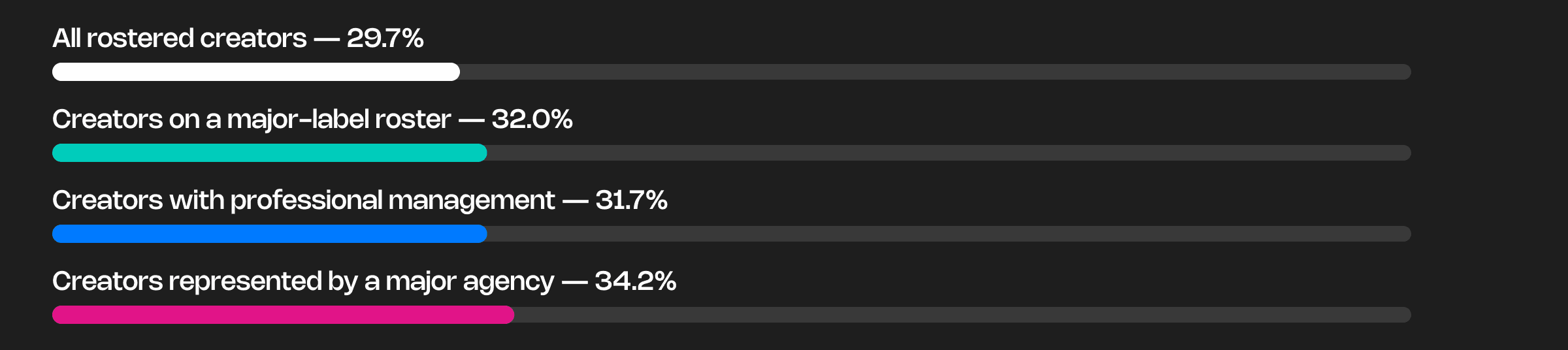
The striking finding is the consistency. Across these groups, women’s representation remains within fewer than five percentage points of the overall creator baseline. These cross-sectional comparisons do not establish that professional representation causes the gap—or solves it. They show that the industry’s most highly resourced sectors have not yet produced representation approaching parity.
The gap is not confined to one part of the business. The plateau appears across the system.
2. The people behind the rosters
Creator representation is shaped by the people who identify talent, allocate resources, negotiate opportunities, commercialize IP and build careers. ROSTR’s preliminary workforce analysis indicates:

ROSTR’s preliminary workforce data raises the question of whether women may be less represented among agents and managers than among rostered creators. Because not all companies have supplied workforce data, these figures should be treated as an early descriptive comparison—not a definitive finding or evidence of causation.
3. Who is backing women: the leaders, ranked
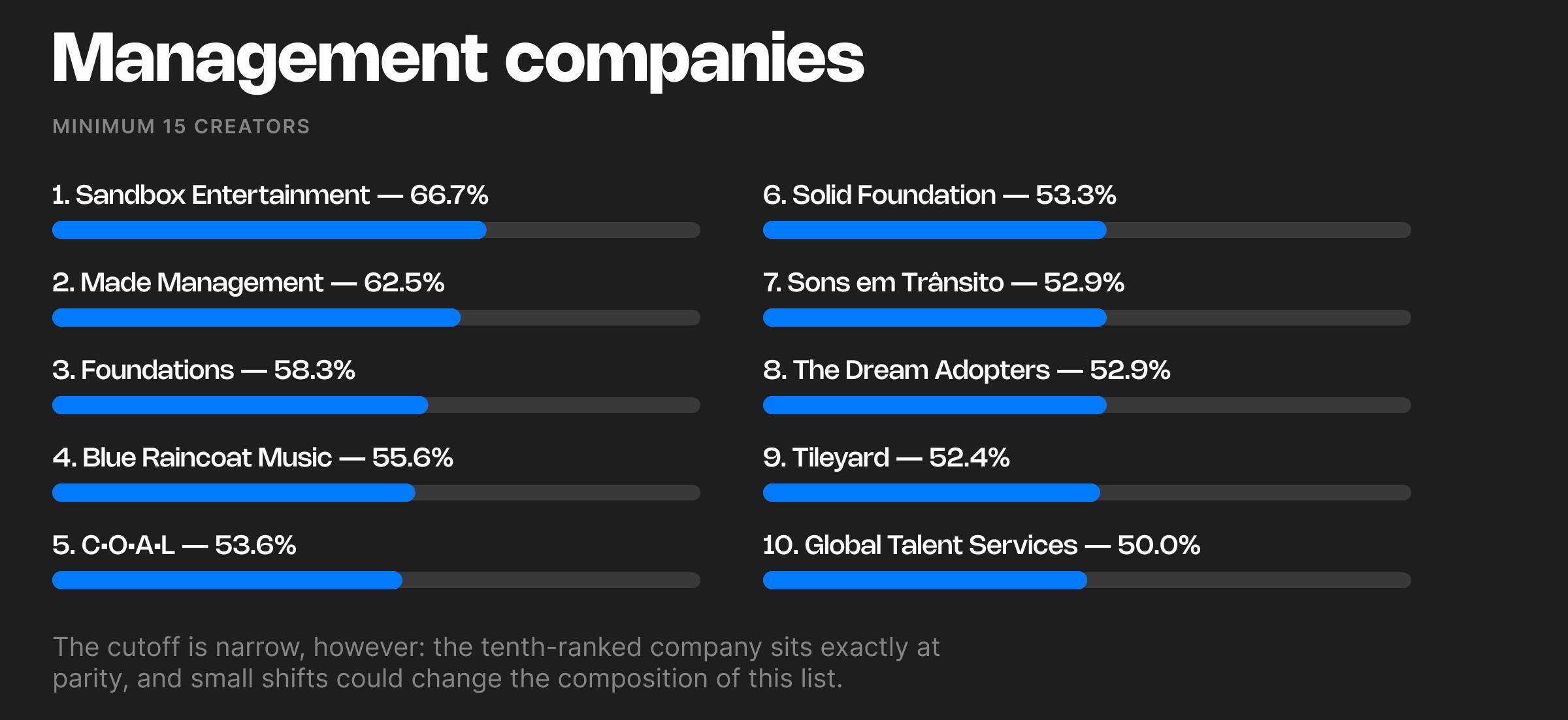
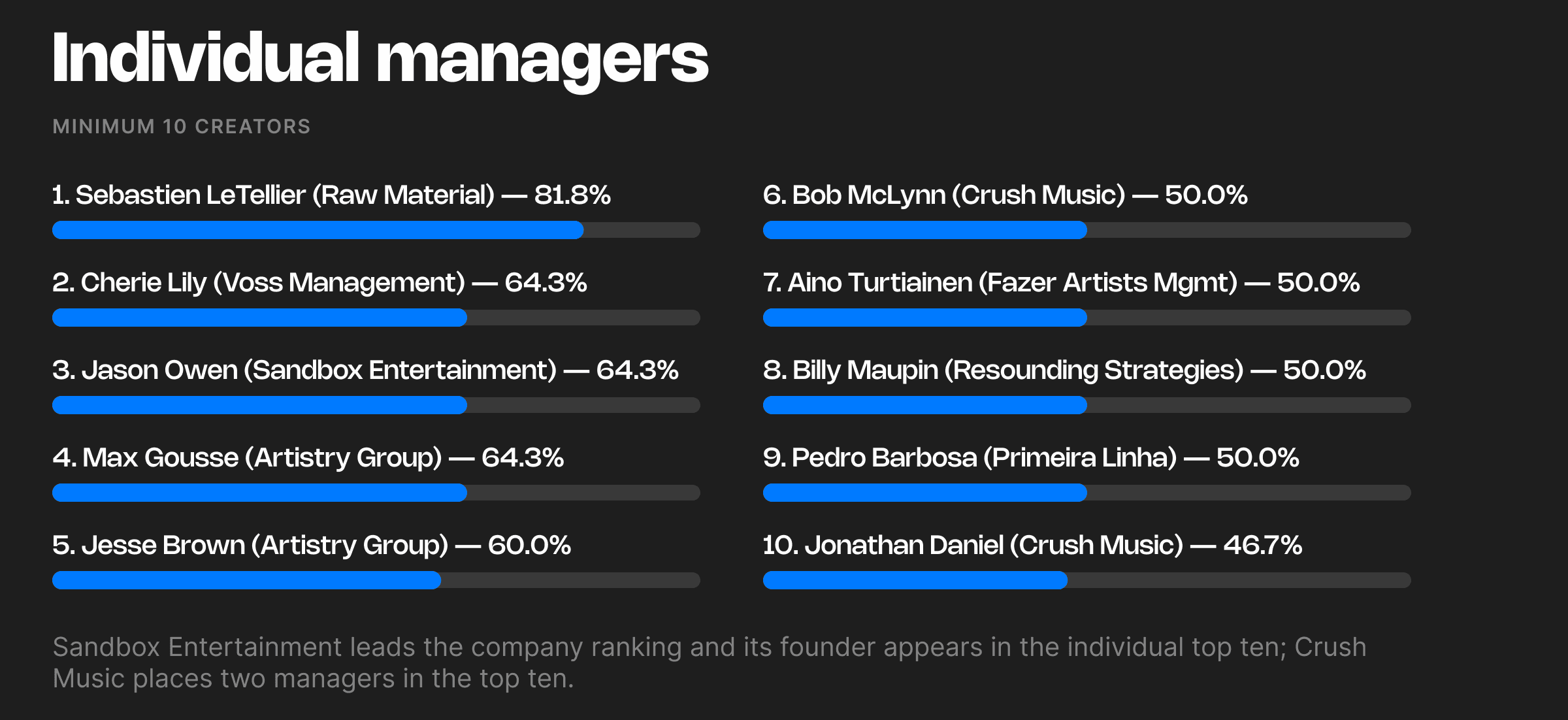
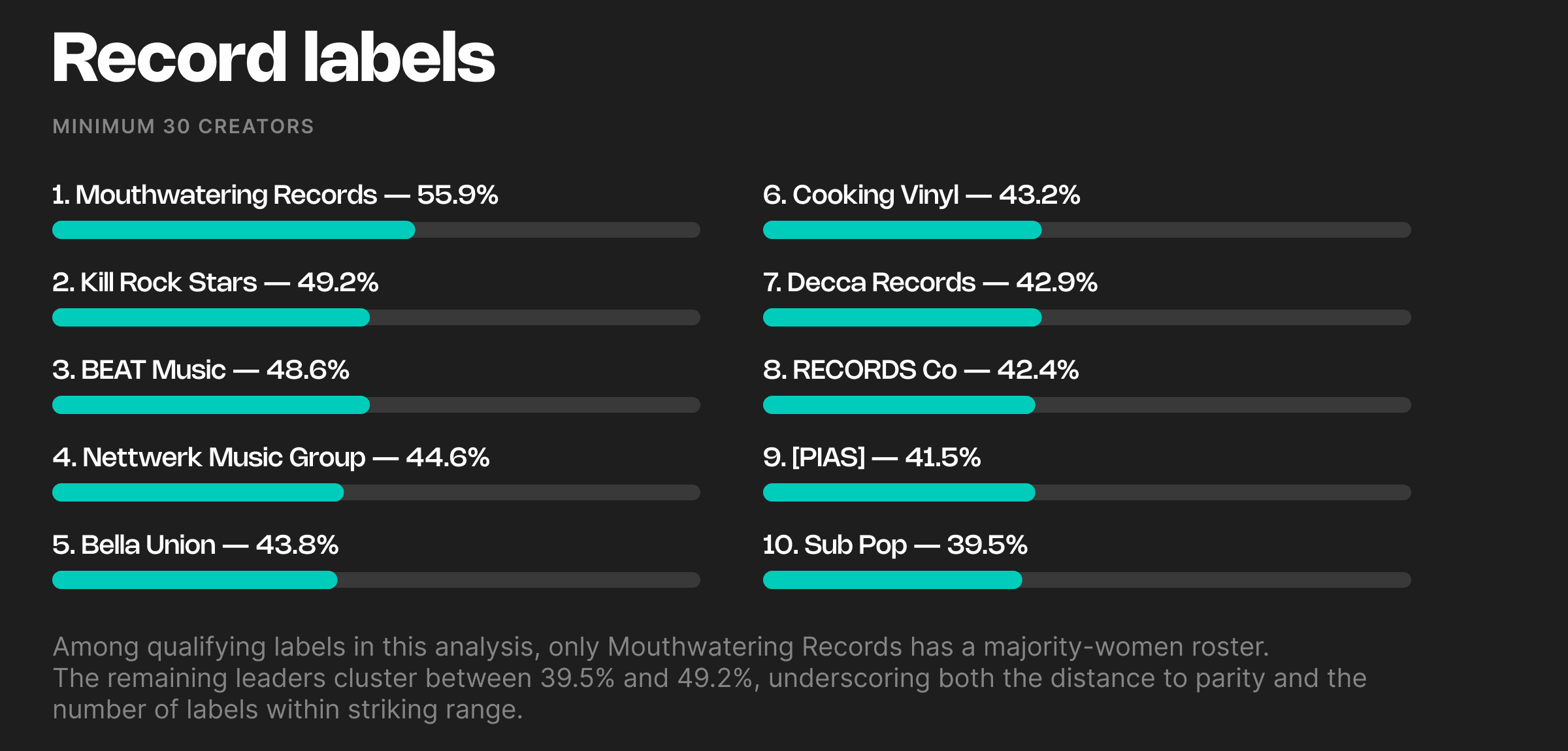
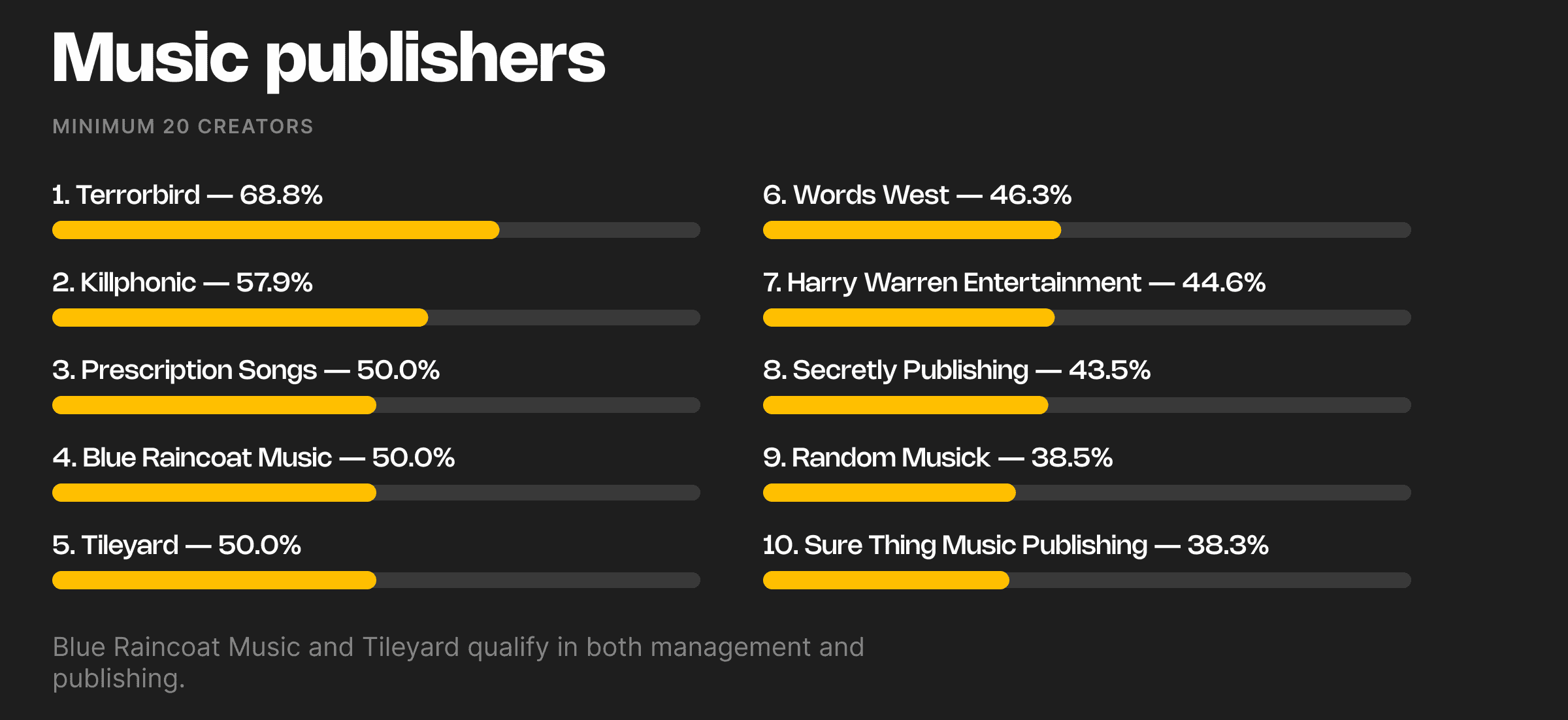
The following rankings recognize the qualifying companies and professionals with the highest share of women on their creator rosters. Depending on the company and representation category, these rosters can include creators working across recording, songwriting, production, and multiple disciplines.
Minimum roster thresholds reduce the distortion that can result from very small rosters. Rankings measure roster composition—not company culture, compensation equity, promotion, investment levels, ownership terms, or the commercial outcomes achieved by creators.



4. The biggest rooms in the business
The category rankings identify leaders at every qualifying size. This section compares some of the industry’s largest rosters directly.
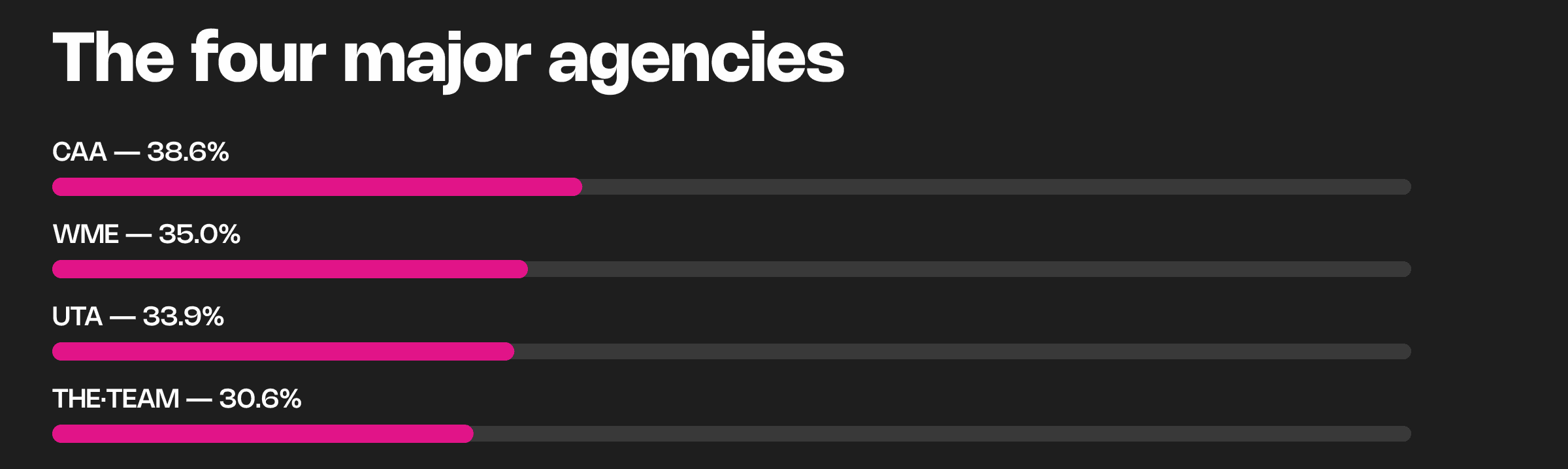
The spread between the highest- and lowest-ranked major agency is eight percentage points, yet none approaches parity. CAA leads the group and employs five of the ten agents with the most women-forward rosters—evidence that individual roster results can point toward company-wide opportunity.
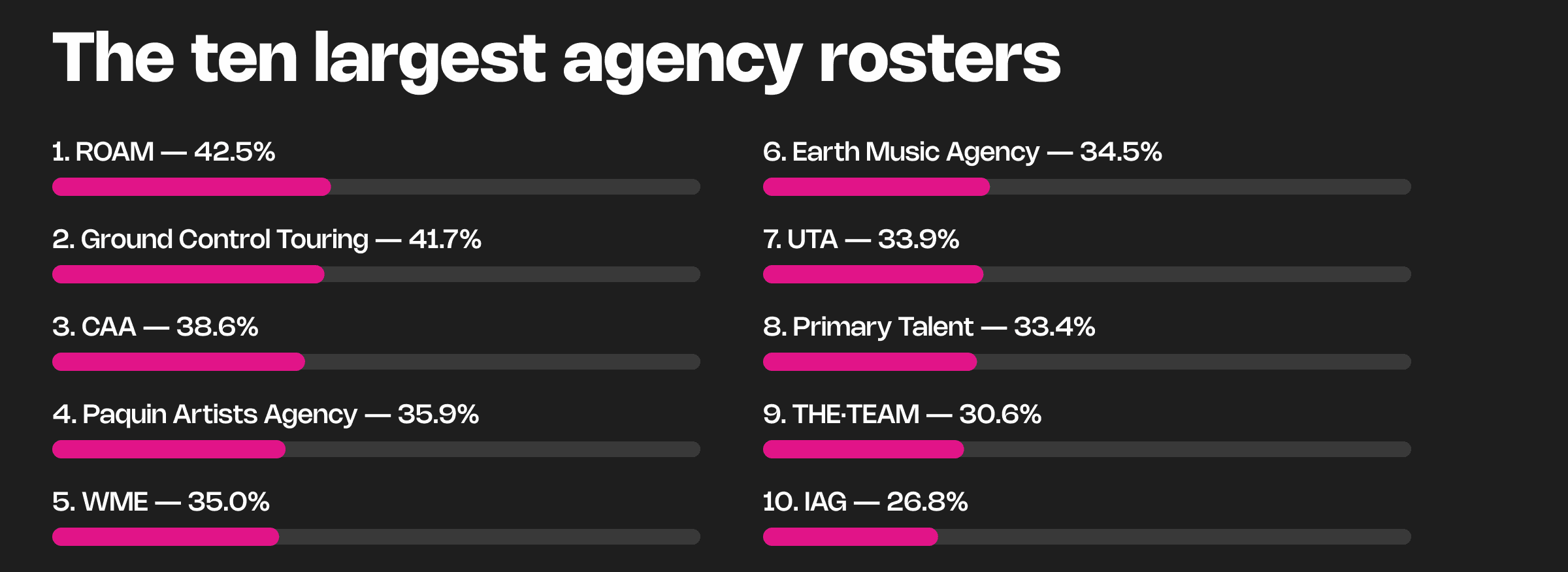
Scale and balance are not opposites. ROAM and Ground Control Touring hold the two most balanced rosters in this large-roster comparison, while the four major agencies remain within approximately four to twelve percentage points of those leaders.
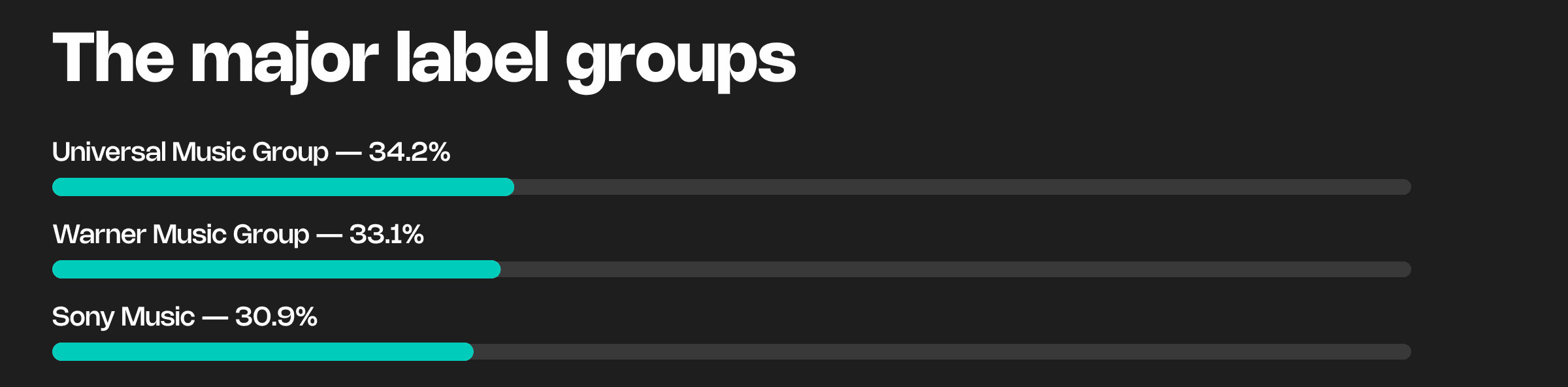
Rolled up across their imprints, the three major label groups fall within approximately three percentage points of one another. Each is slightly above the aggregate independent-label sector in this dataset.
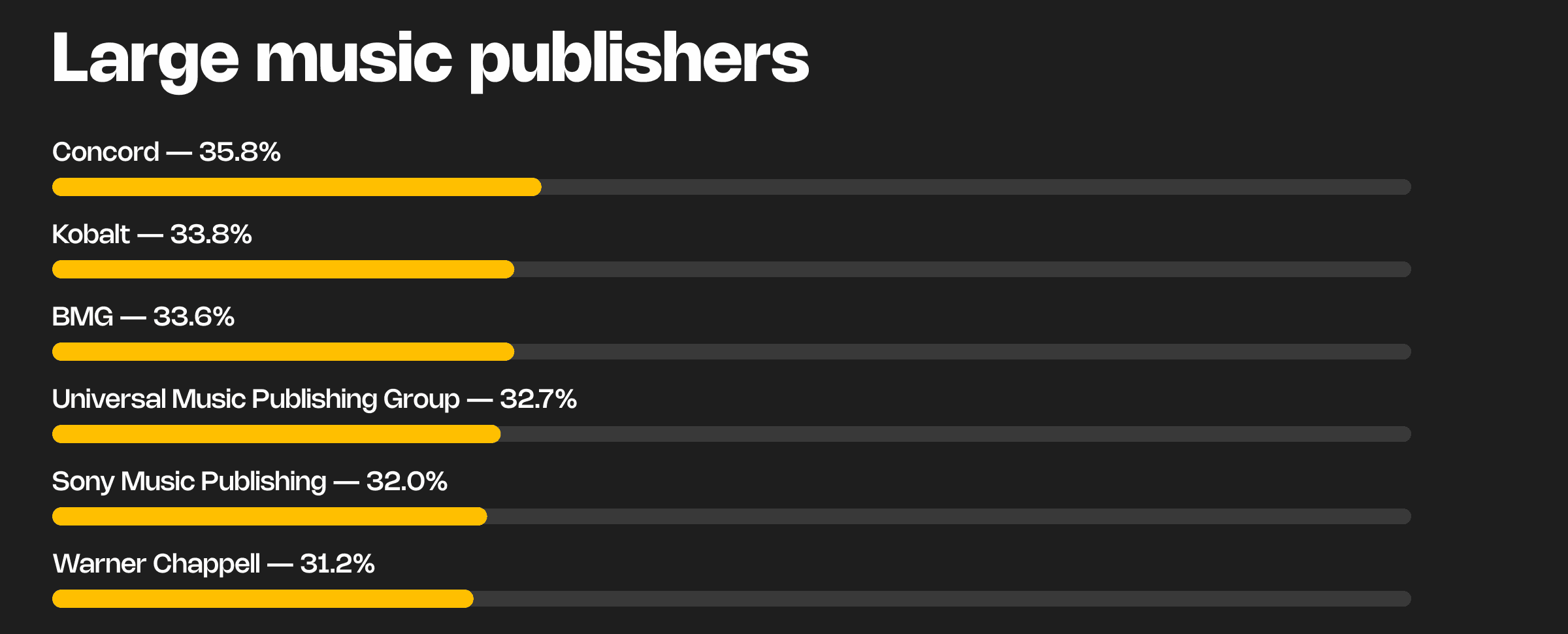
Concord leads this comparison, and Universal Music Publishing Group ranks highest among the three major publishers. The full field falls within fewer than five percentage points, reinforcing the broader pattern of limited differentiation at the top of the market.
Corporate note: BMG and Concord announced a definitive agreement in April 2026 to combine their businesses, subject to closing. Because they continue to operate separately as of this report’s data cutoff, they are shown separately here. If the transaction closes before publication, this note and the comparison should be updated.
5. New signings, but not accelerating
New representation deals recorded since 2023 are more balanced than the standing industry roster:
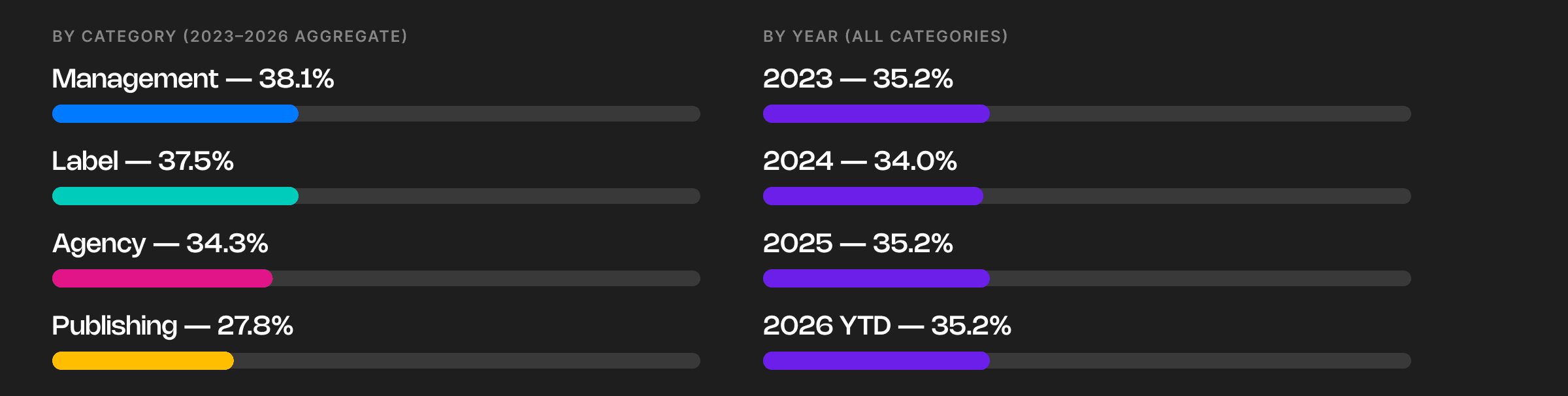
Across all new deals, women’s share has remained nearly flat: 35.2% in 2023, 34.0% in 2024, 35.2% in 2025, and 35.2% in 2026 year to date. The flow of new deals is more balanced than the stock of standing rosters, but it is not improving fast enough to produce parity on its own.
Management remains near 39%, while agency signings have improved since 2024. Label signings have softened—from 38.4% in 2023 to 34.3% in 2026 year to date. Publishing shows the lowest women’s share of new deals among the four categories at 27.8%. Its new-deal rate is below its standing-roster share in this analysis. If that pattern continues, publishing rosters will become less balanced over time.
New signings are among the industry’s most direct and measurable levers. Every company can evaluate its own deal flow, establish goals, and review progress at least annually. For smaller teams and rosters, multi-year rolling averages can prevent a handful of decisions from producing misleading swings.
6. Parity Is Possible
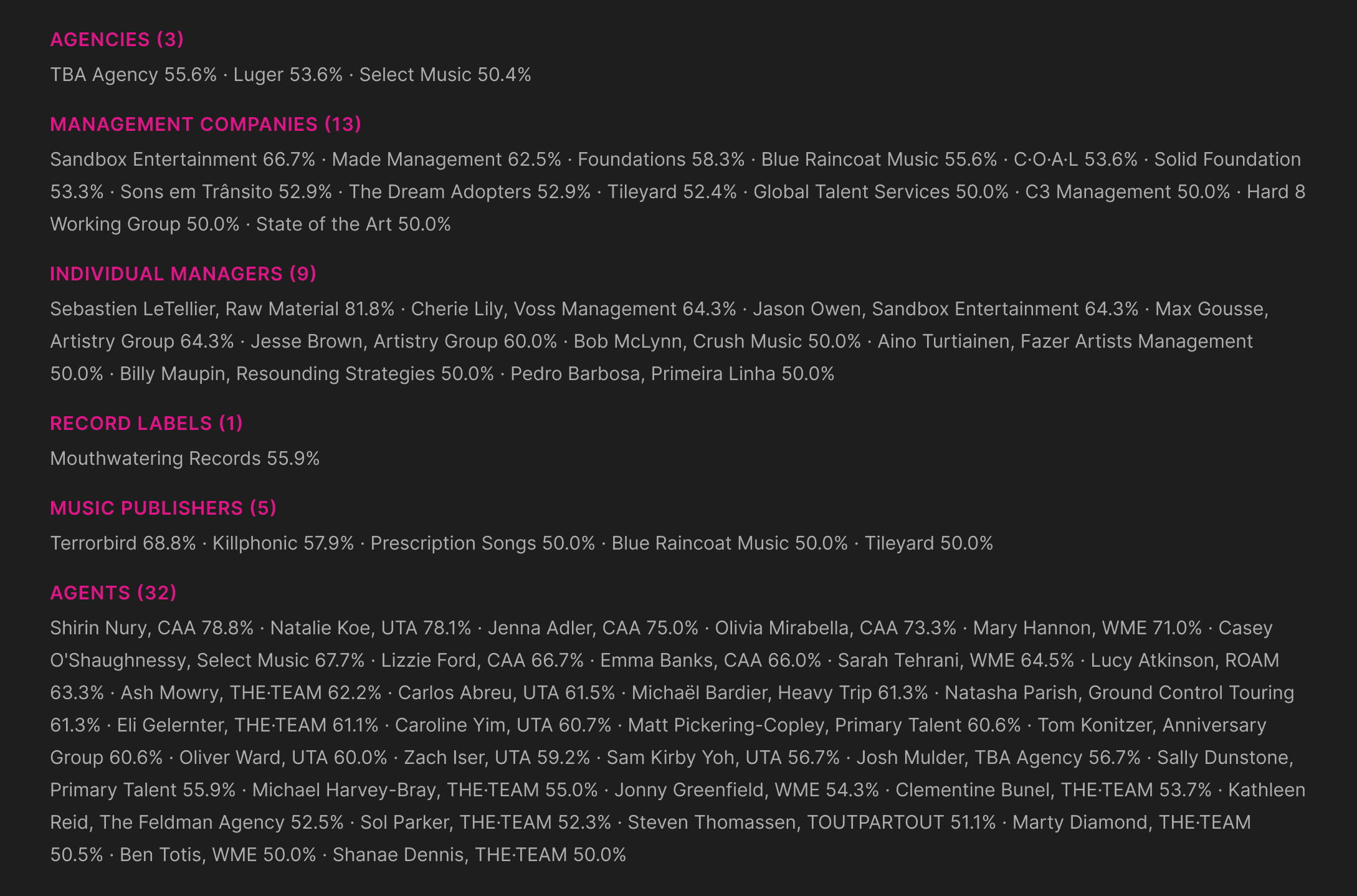
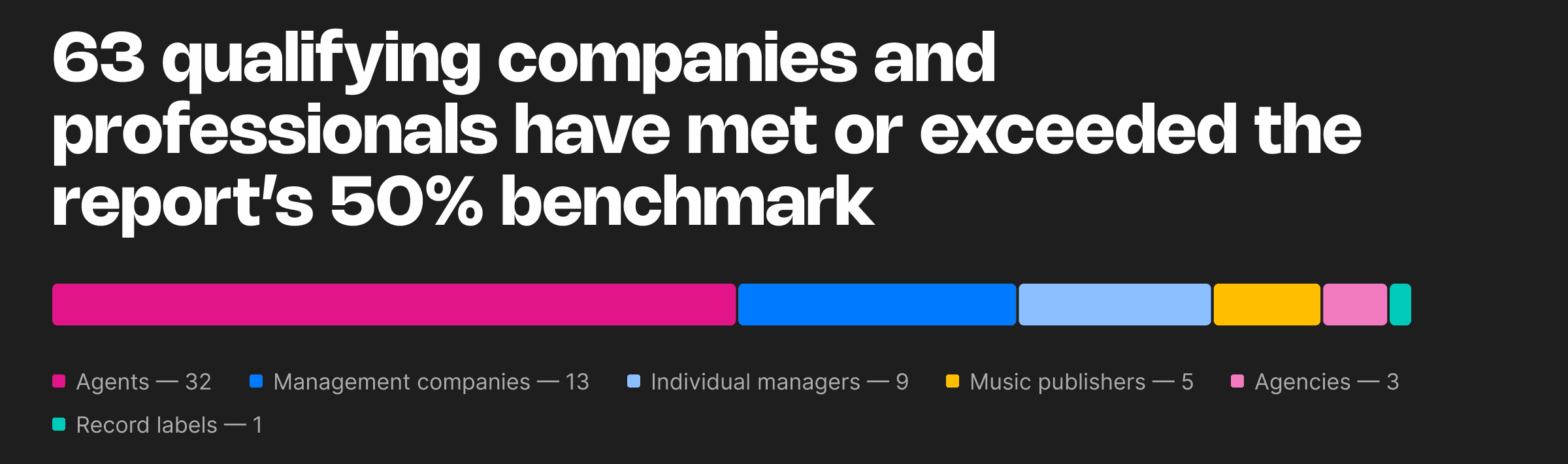
Sixty-three qualifying companies and professionals have rosters that are at least 50% women, joining the 50% Club. Together, they provide the clearest evidence in this report that balanced representation is achievable across categories, markets, and roster sizes.
63 QUALIFYING COMPANIES AND PROFESSIONALS HAVE MET OR EXCEEDED THE REPORT’S 50% BENCHMARK
What the Parity Index tells us
Every major agency is represented. THE·TEAM places seven agents in the club, UTA six, CAA five, and WME four.
Company and individual results can reinforce each other. Sandbox leads the management-company ranking and its founder qualifies individually; Artistry Group and Crush Music each place multiple managers.
Recorded music has the greatest visible distance to travel. Only one qualifying label in this analysis holds a balanced roster.
Parity can extend across business lines. Blue Raincoat Music and Tileyard qualify in both management and publishing.
The Parity Index is designed to grow. Repeating the analysis annually can turn this report from a snapshot into a transparent industry benchmark.
7. The Road to 50%: an industry action agenda
Gender parity is the destination. The path must be ambitious enough to change outcomes and rigorous enough to withstand scrutiny. She Is The Music proposes five commitments for companies that sign, represent, employ, and invest in talent.
Measure the full system. Track women’s representation across creator rosters, new signings, hiring, promotions, leadership, investment, ownership participation, and attrition. Report both totals and the underlying counts.
Set a mathematically credible 2030 representation benchmark. Organizations may use 50% as a voluntary planning benchmark where it is mathematically achievable. Where existing roster size and turnover make that benchmark unattainable by 2030, organizations may publish an interim objective and a longer-term trajectory. Benchmarks should be legally reviewed and should not operate as quotas or determine the outcome of any individual decision.
Broaden access. Set voluntary, aspirational and legally reviewed representation objectives. Expand outreach, sourcing, development and retention practices so that qualified talent from a broad range of backgrounds has a meaningful opportunity to be considered. Make each individual signing and employment decision independently using role-relevant, consistently applied criteria. When aggregate results remain below an organization’s objectives, examine whether barriers may exist in outreach, sourcing, development, evaluation, investment or retention.
Expand pathways into career-shaping roles. Broaden recruitment and outreach, strengthen professional development and mentorship, and examine retention and advancement patterns in agent, manager, A&R, executive, legal, finance, marketing and other career-shaping roles. Individual employment decisions should be made using consistently applied, role-relevant criteria. Roster representation and workforce representation may be measured alongside one another while remaining distinct.
Publish progress annually. Use consistent definitions and thresholds, disclose limitations, recognize leaders, and show year-over-year movement. Transparency creates accountability—and gives the industry a shared success measure.
PARITY IS THE DESTINATION. EVERY ORGANIZATION CAN HELP MOVE THE INDUSTRY CLOSER.
Conclusion
Sixty-three leaders already show that balanced rosters are possible. The next step is to grow the 50% Club—by widening access, developing talent and measuring progress.
THE GAP IS MEASURABLE. PARITY IS POSSIBLE. PROGRESS CAN BE BUILT.
She Is The Music
ROSTR
Concord
BMG
United Talent Agency
William Morris Endeavor
Sandbox Entertainment
Blue Raincoat Music
Tileyard
Inclusive Artist Opportunities
Artist Management
Talent Leadership
Label Deals
Creator Rosters
WME
TBA Agency
Made Management
Foundations
Solid Foundation
C3 Management
State of the Art
Raw Material
Voss Management
Crush Music
Resounding Strategies
Prescription Songs
UTA
ROAM
THE-TEAM
Ground Control Touring
Heavy Trip
Primary Talent
Anniversary Group
The Feldman Agency
United States
United Kingdom
👋 Disclosures & Transparency Block
How We Built the Index
Gender
How gender is recorded. ROSTR records gender at the individual level, based on publicly available information, data submissions and validation from parties who work directly with an artist, stated pronouns, and gender identity as presented on public artist and company profiles. Where an artist's or executive’s own public presentation states their gender, that is the record.
Coverage. Gender is recorded for 99.3% of the individual artists in the dataset. The remaining 0.7% carry no gender classification and are excluded from every denominator in this report. No figure in this report includes an artist whose gender is unrecorded.
Limitations. This method reflects information that is publicly available or supplied by an artist’s own team or employer. It may not capture every individual’s identity perfectly, and the women/non-women framework used for this report’s percentages does not fully represent nonbinary and gender-expansive identities. No figure here should be read as a definitive statement about any individual person’s gender identity. We consider all data directional rather than definitive for the purposes of this report. Gender representation is one dimension of equity; this report does not measure representation or outcomes across race, ethnicity, disability, sexual orientation, age, nationality, socioeconomic background or intersectional experience.
Corrections. ROSTR profiles are claimable and correctable. Artists, professionals, companies and authorized representatives may request corrections to gender, name, affiliation or roster information through data@rostr.cc. Corrections received by July 10, 2026 were reviewed for inclusion in the current edition; corrections received after that date will be reviewed for future editions.
Geographic Scope and Coverage
ROSTR's dataset is global, with records from markets around the world. Coverage is deepest in Western markets, in particular North America, the United Kingdom, and Europe, where the density of tracked companies, rosters, and representation relationships is highest. Coverage outside these markets is real but thinner, and figures in this report describe composition within ROSTR's dataset rather than a census of the worldwide music industry.
Two report rules follow from this. Regional and national subsidiary arms of larger companies are excluded from rankings, so lists compare flagship rosters rather than territories where coverage is partial. And rankings should be read as identifying leaders within a broad, Western-weighted global dataset, not as an exhaustive worldwide accounting.
Who Is Included
Every entry in ROSTR is a single record with a type:
Person: a solo artist who releases music under that name.
Group: a duo or band that releases music together. Groups are excluded from gender figures because gender is measured at the individual level.
Non-artist: an entry that does not release music under that name, including touring-only and similar entries. Excluded throughout.
ROSTR does not tag individuals by creative discipline. There is no separate songwriter, producer, or performer classification on a record; one individual is one record. Individuals connect to companies through roster relationships, and those relationships are what place a person in the agency, management, label, or publishing analysis. This is why one creator can appear in multiple categories: 39,214 unique creators appear across the four categories, including 2,579 who appear in all four. Category figures count each creator once per category, and sector totals are not additive.
Names and Affiliations
All names, spellings, and company affiliations in this report appear as recorded in ROSTR's database at the July 10, 2026 snapshot. ROSTR's records are built from public information and direct submissions from artists' and companies' own teams, and profiles are claimable and correctable by the people and companies they describe. Agent and manager affiliations reflect the representation records available as of the report’s snapshot date. Corrections to names, spellings and affiliations are handled through the process described above.
Final Note
This report is an industry research and advocacy publication, not legal advice. Its recommendations are voluntary and must be implemented consistently with applicable anti-discrimination, employment, labor, privacy, data-protection, competition, contract and collective-bargaining laws. Representation objectives are measurement, planning and accountability tools—not quotas or instructions to make any individual signing, hiring, promotion, investment, compensation or termination decision based on sex or any other protected characteristic. Organizations should obtain advice from qualified local counsel before implementing programs based on this report.
Sources
All music-industry figures and rankings: ROSTR analysis prepared for She Is The Music, 2026. Final scope and cutoff date supplied by ROSTR.
Legal Disclaimer
This report is an industry research and advocacy publication, not legal advice. Its recommendations are voluntary and must be implemented consistently with applicable anti-discrimination, employment, labor, privacy, data-protection, competition, contract and collective-bargaining laws. Representation objectives are measurement, planning and accountability tools—not quotas or instructions to make any individual signing, hiring, promotion, investment, compensation or termination decision based on sex or any other protected characteristic. Organizations should obtain advice from qualified local counsel before implementing programs based on this report.